Engineering Full Autonomy: Why AI and Robotics Could Fully Replace Human Intervention
We are no longer just building tools; we are engineering full autonomy. I want to open up a debate: I believe AI and robotics will fully replace humans in the near future, not just augment us.
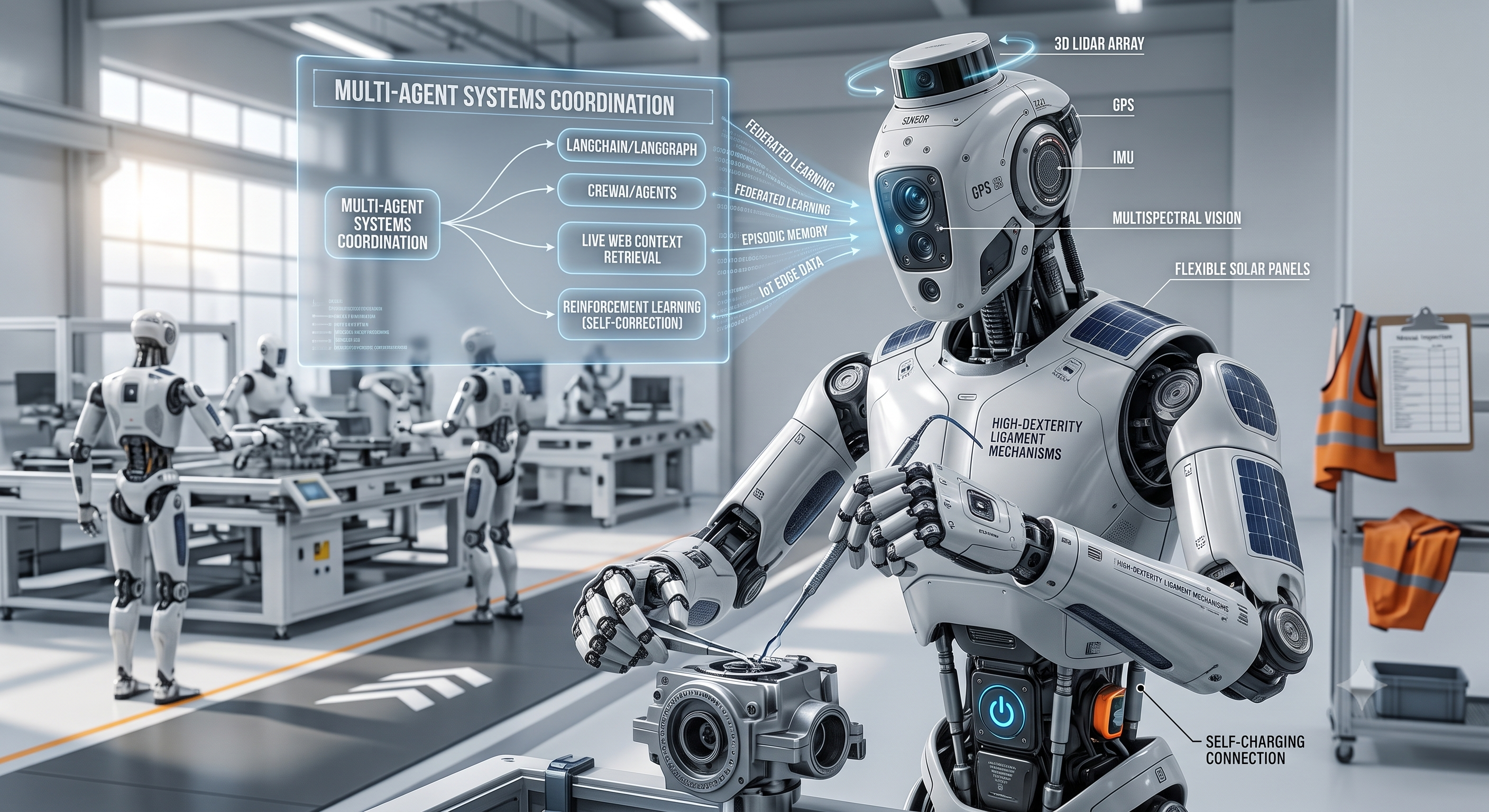
Look at the software trajectory. We are transitioning from isolated, supervised models to Multi-Agent Systems orchestrating complex workflows via frameworks like LangChain, LangGraph, and CrewAI. We are giving these specialized agents Role-Based Access Control (RBAC), long-term and episodic memory, and the ability to self-correct using Reinforcement Learning. They learn directly from their mistakes.
Breaking the "Unseen Data" Myth
The classic argument that AI inevitably fails on "unseen data" is rapidly becoming obsolete. Any intelligent robotic system now has live web-based access. They don't just rely on static, pre-trained weights; they fetch the world's live context dynamically to solve out-of-distribution problems on the fly.
The Hardware Convergence: Sensor Fusion & Edge Computing
On the hardware side, the convergence is just as rapid. When you spend time engineering autonomous perception pipelines—fusing multi-camera feeds, 3D LiDAR point clouds, and high-frequency IMUs—you realize the physical barrier is breaking down. We are successfully deploying federated learning directly onto IoT edge devices for multimodal threat detection.
Now, we are adding highly articulate hands and legs. We are watching systems perfectly execute complex physical gestures, maintain balance while playing football, and perform millimeter-precise medical surgeries. They are autonomously navigating unstructured environments to do heavy industrial assembly and dynamic parkour.
Even modern defense networks have crossed this threshold. Advanced threat detection and engagement systems no longer require manual tracking or execution; they operate fully autonomously, capable of running their own complex defensive loops.
The Self-Sustaining Infrastructure
If we integrate this entire stack into a single physical system, the old engineering bottlenecks disappear. A system equipped with high-capacity batteries and solar loops—that is also programmed to physically locate and self-charge at any standard electricity switch—becomes truly self-sustaining.
If we have a self-learning multi-agent brain, live web retrieval, a multimodal sensor fusion suite, and autonomous physical dexterity, what exactly is the human operator left to do?
Bringing these individual real-time modules together feels less like science fiction and more like an inevitable, straightforward engineering roadmap.
The Open Debate
I want to hear from my network, especially those working in complex systems, hardware, and AI governance.
- Where does this "ultimate system" fail?
- Why wouldn't this tech stack completely replace human intervention?
Poke holes in this perspective in the comments below. 👇
#ArtificialIntelligence #MultiAgentSystems #AutonomousSystems #Robotics #SensorFusion #EdgeComputing #TechDebate #FutureOfWork #AIvsHuman #AGI #TechTrends2026 #DisruptiveTech #Innovation #AgenticAI #ReinforcementLearning #FederatedLearning #LangChain #MachineLearning #HumanoidRobots #LiDAR #IoT #RoboticsEngineering
Discussion (0)
Please log in or register to leave a comment.