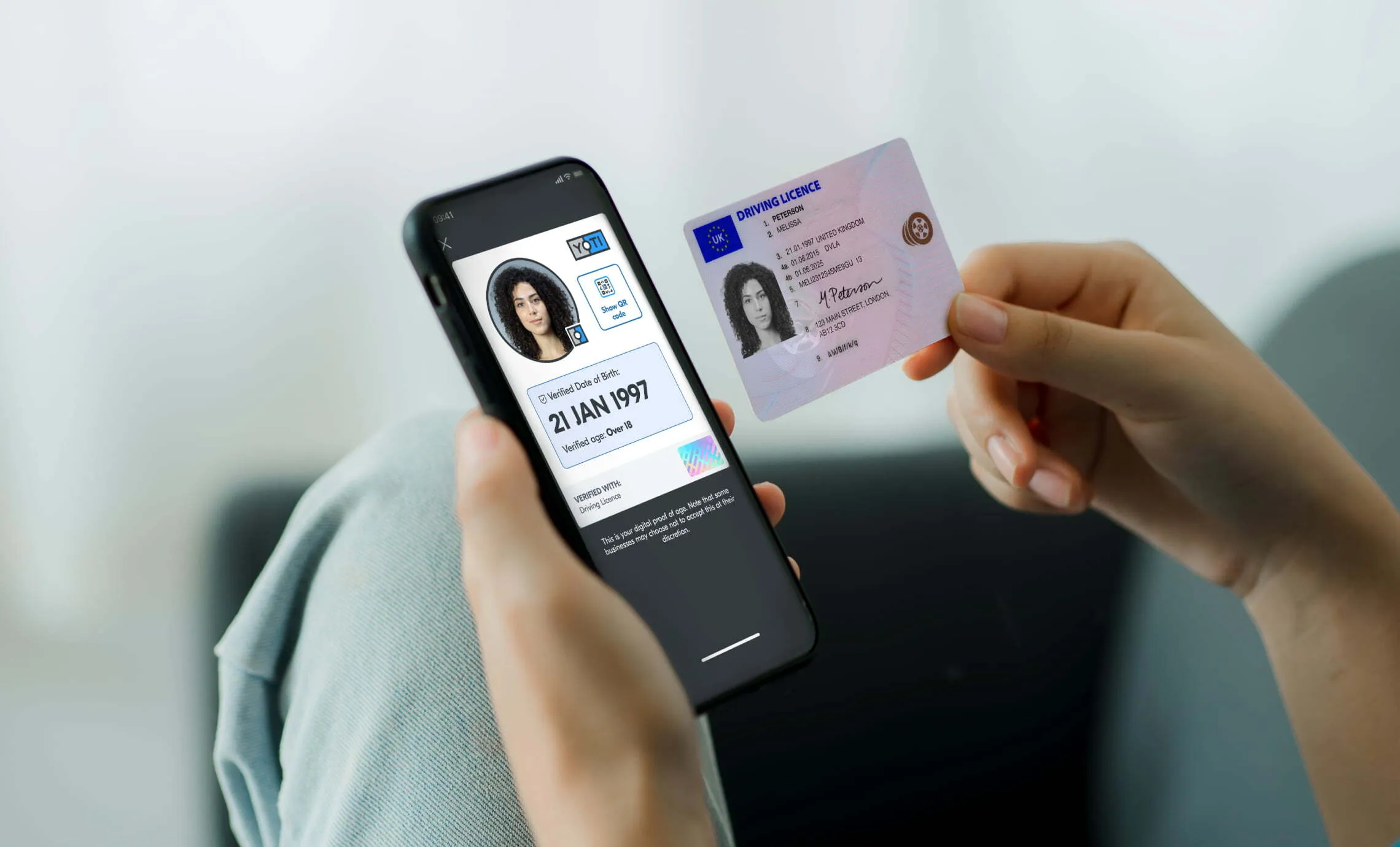
Beyond the Plastic Card: The Architecture and Security of Digital IDs
The era of carrying a leather wallet stuffed with easily forged plastic cards and paper certificates is ending. As we transition to a fully paperless society, the concept of a Digital ID has evolved from just a "virtual card" into a comprehensive, cryptographically secure legal infrastructure.
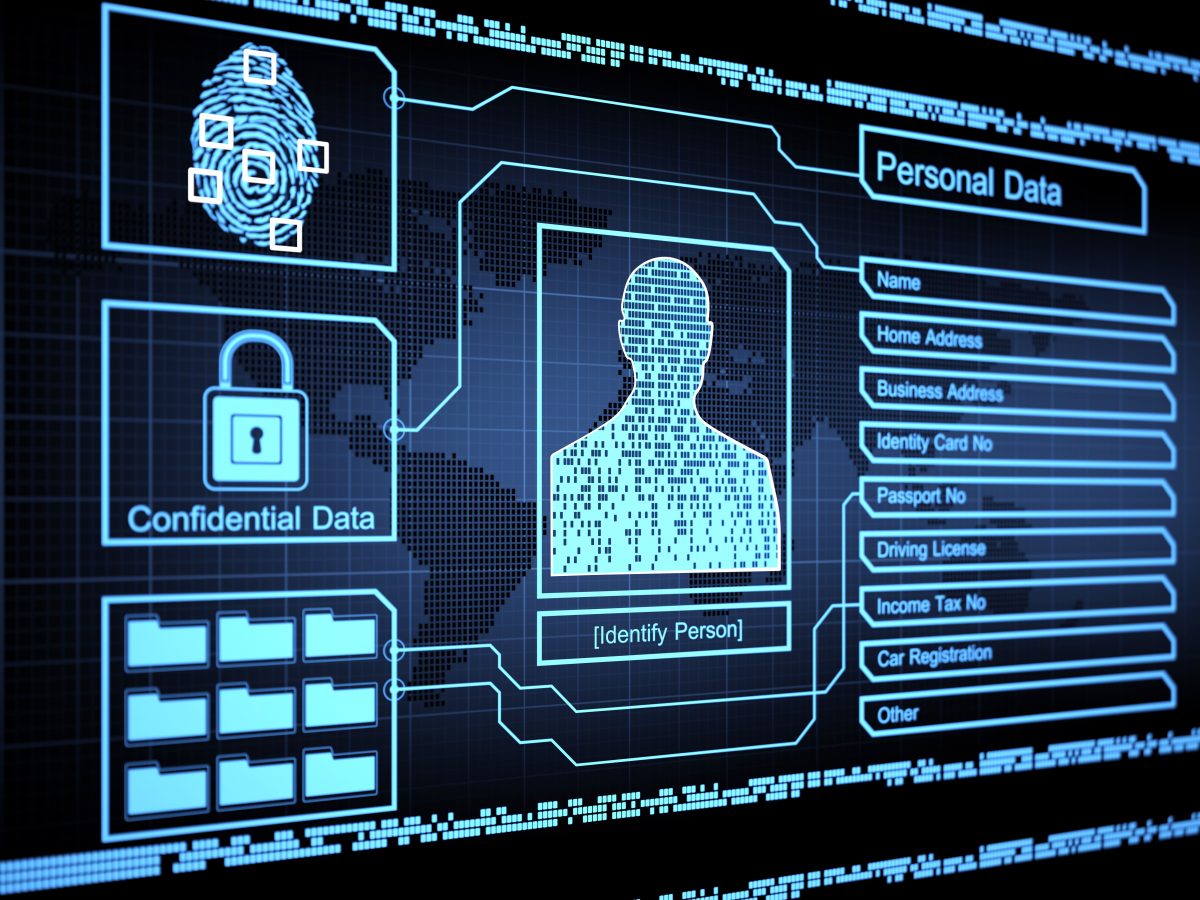
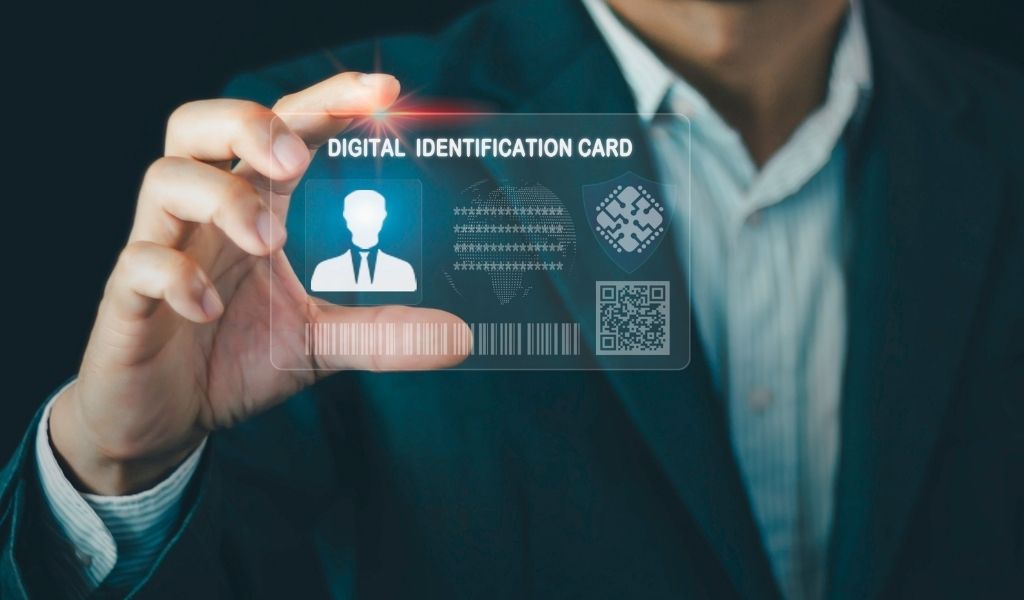
A Digital ID is a secure, verifiable electronic equivalent of a physical identity document. It acts as a reusable digital credential that allows individuals to prove who they are—both online and offline—to access services, sign legal documents, and conduct business transactions without relying on physical paperwork.
At WebDark, we analyze the backend of modern systems. Let’s break down the architecture of Digital Identities, how Verifiable Credentials secure our data, and how this technology is being adopted globally.
The Core Architecture of a Digital ID
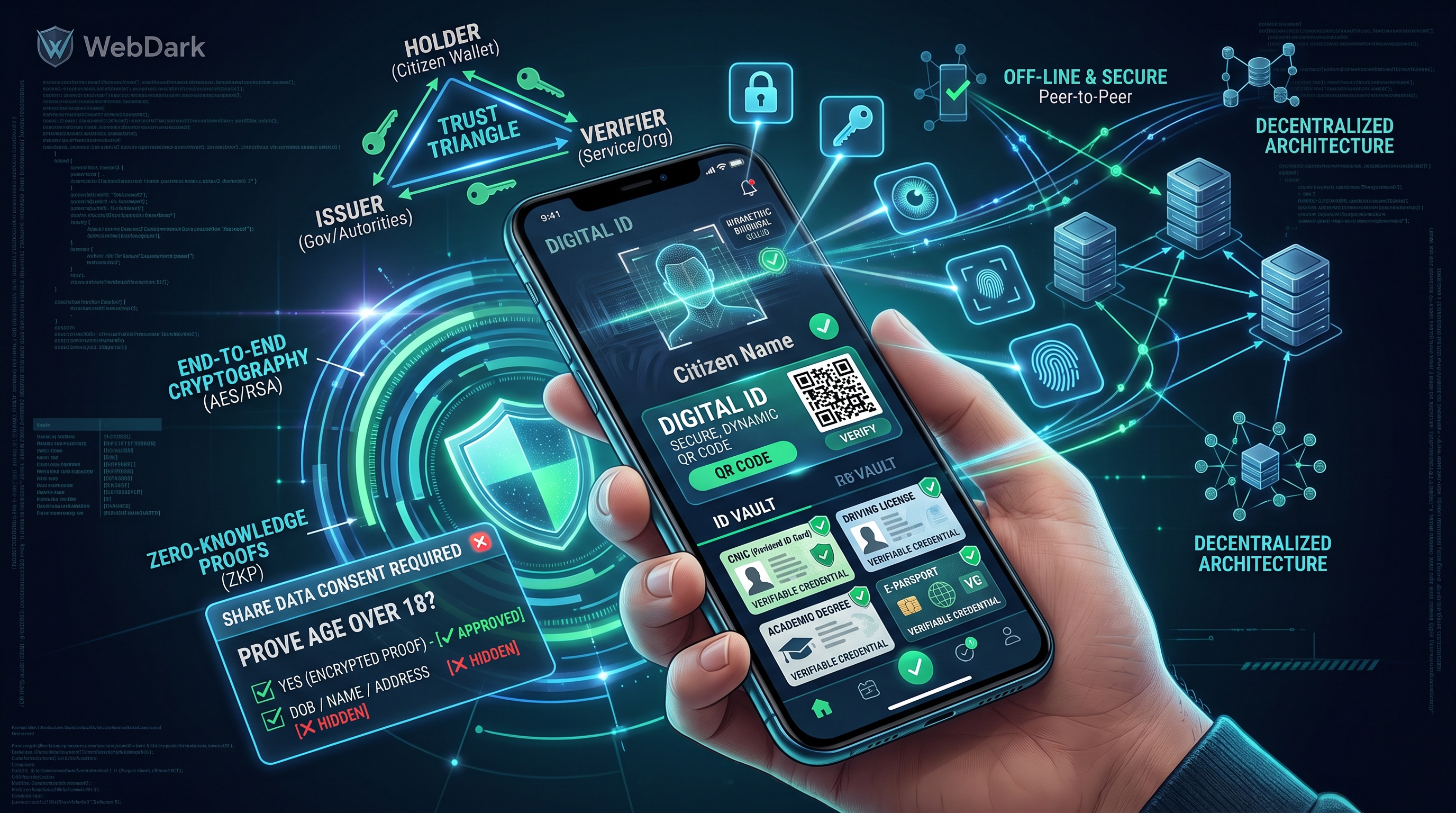
Modern digital identity ecosystems are engineered to be vastly more secure than physical plastics or paper certificates, which are easily cloned or stolen. They achieve this through several core technical pillars:
- Biometric Binding: A digital ID app cannot be unlocked simply by guessing a passcode. It requires your live biometric signature (such as facial geometry, fingerprint scans, or iris validation), confirming the physical holder matches the digital file.
- End-to-End Cryptography: Personal data is encrypted using advanced public-key cryptography. Even if hackers intercept the data stream, it remains unreadable without specific digital keys.
- Single Sign-On (SSO): Digital IDs act as a master key, allowing users to log into multiple government portals, banks, and private services using just one unified, secure gateway.
- Decentralized Architecture: Instead of keeping one massive government "honeypot" database for hackers to target, modern systems hold data locally on the user's secure smartphone hardware and verify it peer-to-peer.
The Trust Triangle & Verifiable Credentials (VCs)
Unlike a simple PDF or a photo of an ID (which can be easily photoshopped), modern Digital IDs run on Verifiable Credentials (VCs). Built on international open standards set by the World Wide Web Consortium (W3C), VCs allow citizens to share personal data in a way that is tamper-evident and instantly verifiable.
This operates on a "Three-Part Trust Triangle":
- The Issuer: An authoritative body (like a government agency or university) generates the credential, signs it with their private cryptographic key, and issues it to the citizen.
- The Holder (Citizen): The citizen stores this credential safely inside a secure digital wallet app on their smartphone.
- The Verifier: A third party (like a bank or border control) checks the citizen's data. They can instantly verify the cryptographic signature against a public registry without ever contacting the issuer directly.
Securing Data with Zero-Knowledge Proofs (ZKP)
VCs solve a major security flaw of the internet age: the need to constantly upload full documents to third-party databases.
Through Data Minimisation and Consent-Based Sharing, users maintain complete control over their private information. Using Zero-Knowledge Proofs (ZKP), you do not have to hand over your entire digital document. For instance, if a venue needs to check if you are over 18, your wallet can transmit a cryptographic proof answering "Yes," without revealing your exact date of birth, name, or home address. Furthermore, because verification happens entirely between your phone and the verifier using public keys, the issuer has zero visibility into where or when you are using your ID, eliminating "phone-home" tracking.
The Digital Vault: Dematerializing Your Life
The Digital Vault is a secure, citizen-controlled digital locker embedded directly inside your smartphone application.
Almost any official document issued by a government authority, academic institution, or private corporation can be digitized into a cryptographically signed VC and stored in this vault. This includes:
- Primary Identity & Travel: National identity cards, family records, biometric e-Passports, and Digital Driving Licenses.
- Academic & Health: University degrees, matriculation certificates, marriage certificates, and vaccination records.
Every piece of paper digitized into the vault is given a unique, dynamic QR code. This allows local authorities or businesses to verify your credentials offline. When scanned, the cryptographic code proves the document is 100% authentic and unaltered, without needing to ping a central internet database.
Global Adoption: Who is Leading the Charge?
More than 180 countries have already launched or are actively building foundational digital ID frameworks to transition away from physical documents. The global landscape features several mature, live systems:
- Pakistan (PakID): Fully operational via the National Database and Registration Authority (NADRA), offering dematerialized identity cards, biometric verification, and dynamic QR integration.
- Estonia (eID): The global pioneer. Active for over 20 years, over 99% of citizens use it to vote online, sign contracts, and access healthcare.
- India (Aadhaar): The world’s largest biometric identity system, covering over 1.3 billion residents.
- Singapore (Singpass) & Sweden (BankID): Highly integrated models used by nearly all citizens for banking, taxes, and legal documents.
- The European Union: Under the eIDAS 2.0 regulation, all 27 EU member states are actively rolling out the EU Digital Identity Wallet.
- African Nations: Countries like Ethiopia (Fayda) and Nigeria (NIN) are building massive digital public infrastructures.
The Verdict
Digital IDs represent a fundamental upgrade to global security and convenience. By replacing easily lost, forged paper documentation with Verifiable Credentials and Zero-Knowledge Proofs, we are engineering a future where financial inclusion, remote access, and absolute data privacy are the default standards of daily life.
Discussion (0)
Please log in or register to leave a comment.