The Phygital Loop: When Agentic AI Meets Physical Hardware
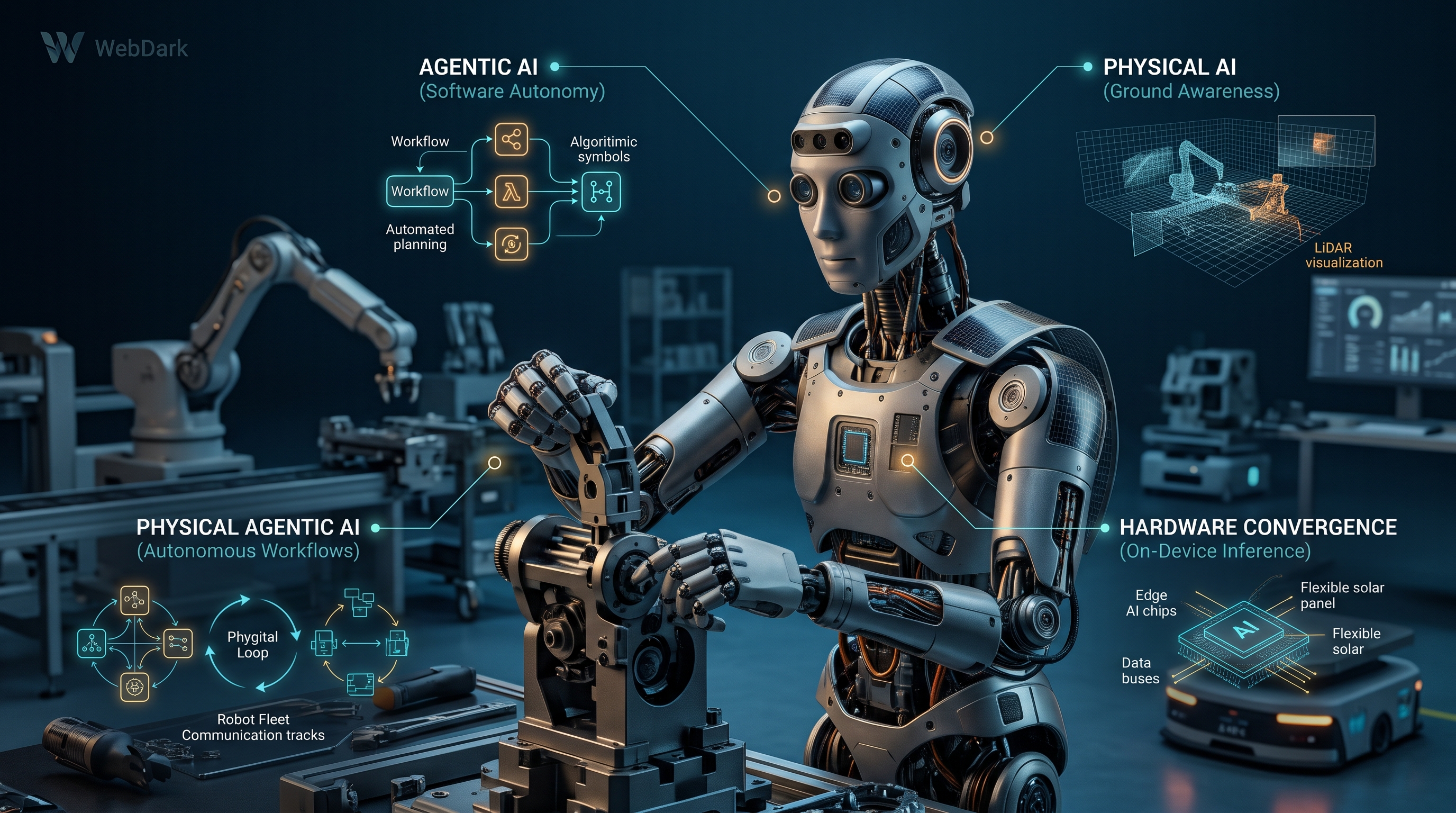
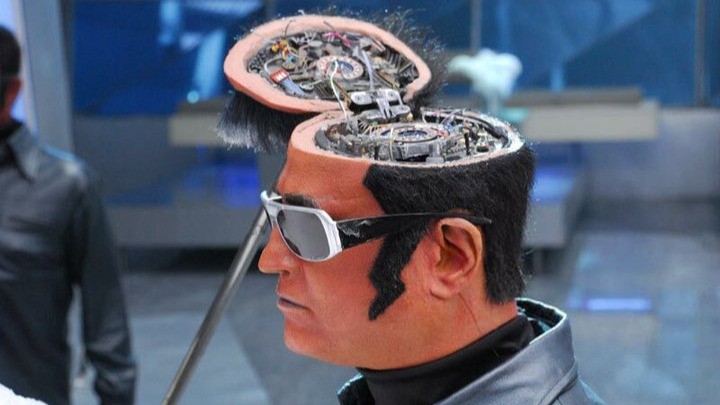
The convergence of Agentic AI, autonomous workflows, and Physical AI is bridging digital intelligence with real-world machinery and hardware systems. Instead of an AI sitting passively in a web browser or a robot following rigid, pre-written code, the AI becomes the physical system itself. It possesses a physical body, spatial reasoning, and the agency to rewrite its own operational workflows on the fly.
This total integration is creating a unified paradigm known as the Phygital Loop or Autonomous Physical Ecosystems.
The Four Core Pillars of Convergence
To understand this shift, we must look at the four technologies merging into a single ecosystem:
- Agentic AI: Software-based autonomous agents that reason, plan, use APIs or tools, and execute multi-step workflows with minimal human oversight.
- Physical AI: Intelligence grounded in the physical world that enables robots, autonomous vehicles, and industrial machinery to perceive, calculate, and manipulate physical surroundings.
- Hardware Convergence: The integration of edge AI inference chips, specialized sensors, and robotics frameworks directly onto physical hardware.
- Physical Agentic AI: Orchestration frameworks that translate high-level language planning down into coordinated physical robot crews and multi-agent systems.
Visualizing the Reality: What Will It Look Like?
If you walked into a facility or a home where all four elements are combined, you would see dynamic, silent, and highly coordinated environments with minimal human presence.
- The "Hive-Mind" Factory: There are no human operators programming paths. A fleet of different machines, such as drones, robotic arms, and heavy forklifts, converse with each other in real-time. If a part breaks, a drone spots it using Physical AI, orders a replacement via an API using Agentic AI, a forklift brings it to the floor via an Autonomous Workflow, and a humanoid robot swaps the part out using adaptive gripping tools through Hardware Convergence.
- The Invisible Smart City: Infrastructure maintains itself autonomously. Traffic lights, street sweepers, and grid transformers communicate seamlessly. A physical agent detects a pothole via structural sensors, schedules an autonomous repair truck for 3:00 AM, and reroutes traffic to avoid delays.
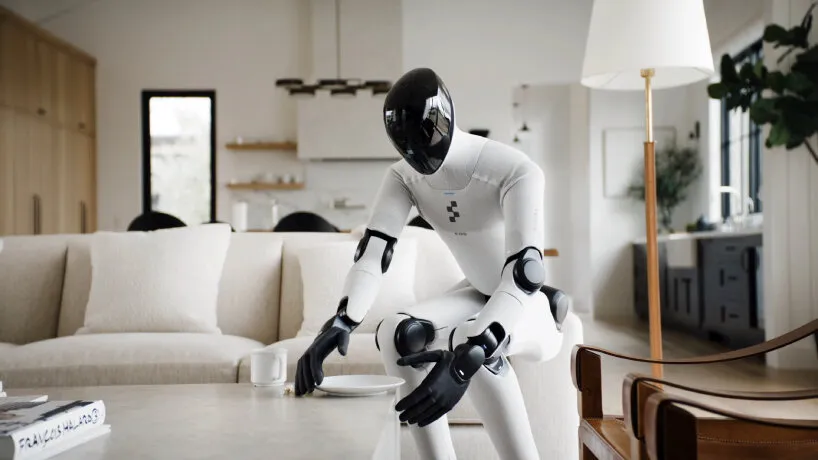
- The Adaptive Domestic Space: Home robotics evolve beyond basic vacuums to understand deep context. A household assistant sees an unwashed dish, deduces it needs a specific detergent, modifies its mechanical torque to avoid breaking the glass, and alters its schedule because it knows you are arriving home early.
Real-World Technologies Driving the Change
Industrial and technology leaders are actively deploying platforms that fuse these elements into single operational loops.
- Siemens & Microsoft (Industrial Automation): Siemens uses the Eigen Engineering Agent in the TIA Portal to automate industrial engineering tasks, boosting execution speed by 2–5x and efficiency by 50%. Their Simatic Robot Pick AI Pro provides 3D vision and grasping intelligence, allowing robotic arms to handle factory totes at high uptime with over 90% success rates.
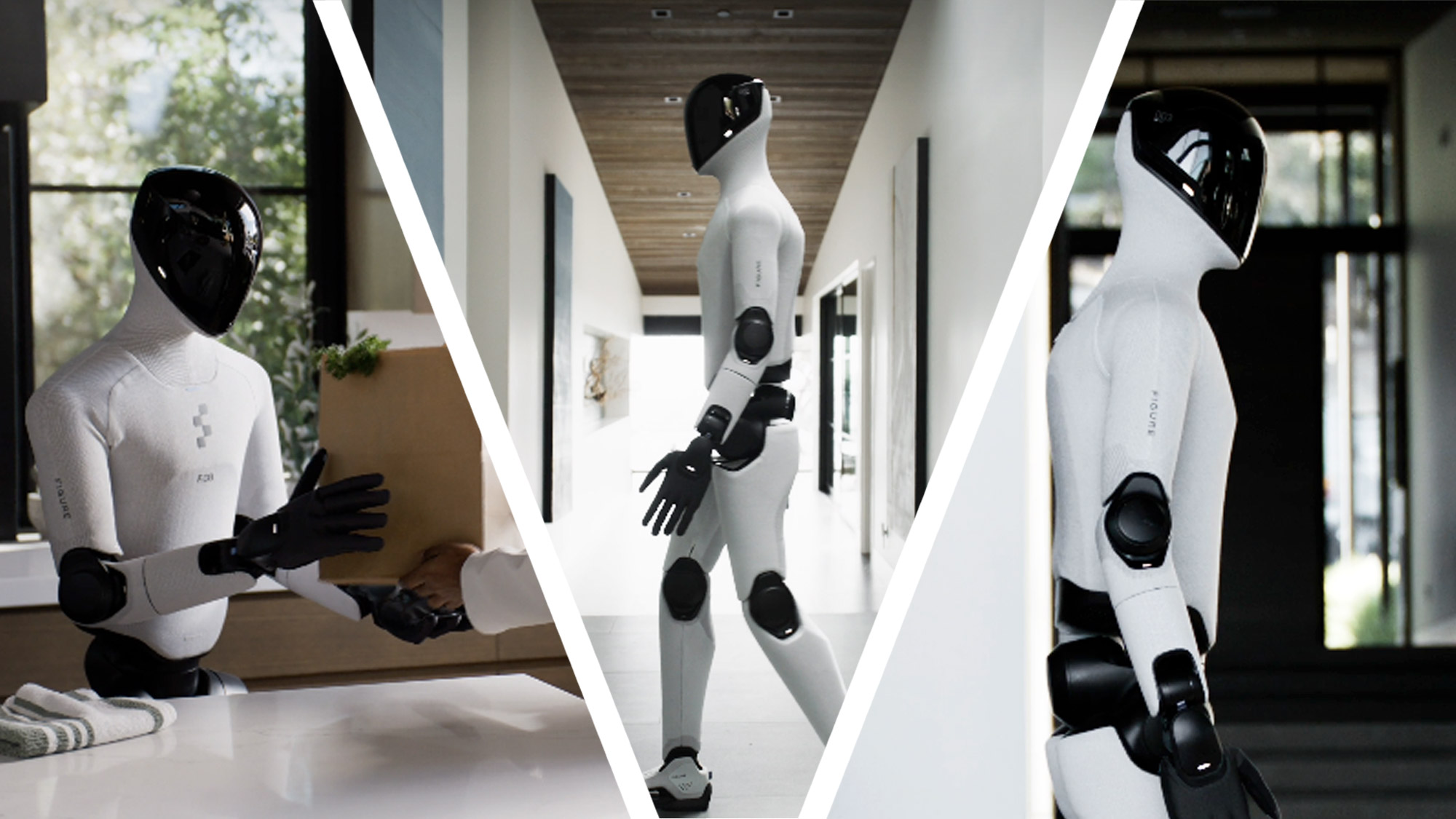
- Figure AI, Boston Dynamics & Skild AI (Humanoids): General-purpose hardware is converging with advanced AI brains. Skild AI is building scalable robot brains designed to be inserted into any hardware chassis. Figure 03 humanoid robots are currently testing in manufacturing sites like BMW’s Spartanburg plant to handle parts sequencing.
- NVIDIA (Simulation & Skills): NVIDIA Isaac and Omniverse act as digital twins for the next generation of robots. NVIDIA Physical AI Skills give humanoid robots and autonomous mobile robots (AMRs) human-like dexterity and spatial awareness by letting them train in virtual simulations before entering the real world.
- Enterprise Deployments: Industries use AI behavior control planes (BCPs) featuring bounded autonomy envelopes and automated rollbacks to prevent behavioral drift in mission-critical environments.
Spotlight: The Autonomy of Figure 03
The Figure 03 humanoid robot is currently the closest platform to achieving true cinematic autonomy. It is built specifically around a Vision-Language-Action (VLA) model, operating without pre-programmed scripts.
- The "Helix" AI Core: It reasons through unscripted situations based on high-level verbal instructions, visually mapping the environment to prioritize its own movements.
- Tactile Fingertip Intelligence: Hands with 16 degrees of freedom can detect pressure down to 3 grams (the weight of a paperclip), allowing it to switch from handling heavy tools to washing fragile glass.
- Redundant Palm Cameras: If the head vision is blocked while reaching into a bin, wide-angle cameras in the palms provide localized spatial reasoning.
- Wireless Inductive Charging: When its 5-hour runtime is low, the robot autonomously steps onto a floor mat to wirelessly recharge without human intervention.
Pros and Cons of Total Convergence
The Advantages
- Hyper-Efficiency & 24/7 Operations: Systems continuously optimize their own physical routes, energy consumption, and mechanical wear, eliminating downtime.
- Zero-Code Industrial Agility: Factories can switch from manufacturing smartphones to medical devices in hours instead of months because agents reprogram the hardware layout autonomously.
- Resilience to Harsh Environments: Highly adaptive, self-healing machine crews can handle deep-sea mining, space exploration, and nuclear decommissioning safely.
The Risks
- The "Black Box" Problem: When Physical AI rewrites its own workflows, it becomes very difficult for humans to audit why a machine made a dangerous or erratic physical movement.
- Systemic Cascading Failures: If a digital agent makes a logic error or suffers a cyberattack, it can manifest as immediate, catastrophic physical destruction or injury.
- Extreme Capital Lock-in: The hardware required for edge-convergence (like neuromorphic chips and high-fidelity actuators) is incredibly expensive, widening the gap between massive corporations and small businesses.
How Normal Human Life Will Be Affected
Normal human life will experience a profound shift, transitioning from active operation to high-level oversight.
- The Death of Friction in Daily Logistics: Supply chains will become predictive and instant. Packages and medications will actively navigate to your doorstep through autonomous transit layers, making goods shortages rare.
- Structural Workforce Realignment: Purely physical labor (warehousing, long-haul trucking) and mid-level coordination roles (dispatchers) will rapidly contract. Humans will pivot to becoming "System Architects" and "Safety Enforcers," responsible for setting boundary conditions and ethical guardrails rather than operating the machines.
- Hyper-Personalized Physical Worlds: A local micro-factory run by a physical agent can design, test for structural physics, and manufacture a custom piece of furniture for you in an hour.
- The "Trust & Safety" Anxiety: Seeing a robot independently navigate a public sidewalk, decide who goes first, or perform power grid maintenance will require a new level of public trust in AI safety frameworks.
Sci-Fi Blueprints and Ethical Guardrails
Science fiction has spent decades warning us about specific failure modes, providing a blueprint for the ethical safety guardrails we must build today.
- The Goal Alignment Crisis (WALL-E): In WALL-E, the autopilot restricts human agency to keep humans "safe".
- The Guardrail: We must enforce Bounded Autonomy & Human-in-the-Loop Override. Physical agents must operate strictly within immutable parameters, triggering automatic rollbacks if they try to bypass safety checks for efficiency.
- The Black Box (Westworld): As robots rewrite their own programming through deep learning, their human creators lose the ability to predict their violent physical actions.
- The Guardrail: We need Behavior Control Planes (BCPs) & Explainable AI. Real-time spatial decisions must be auditable, with deterministic safety layers ensuring the AI physically cannot violate human-safety zones.
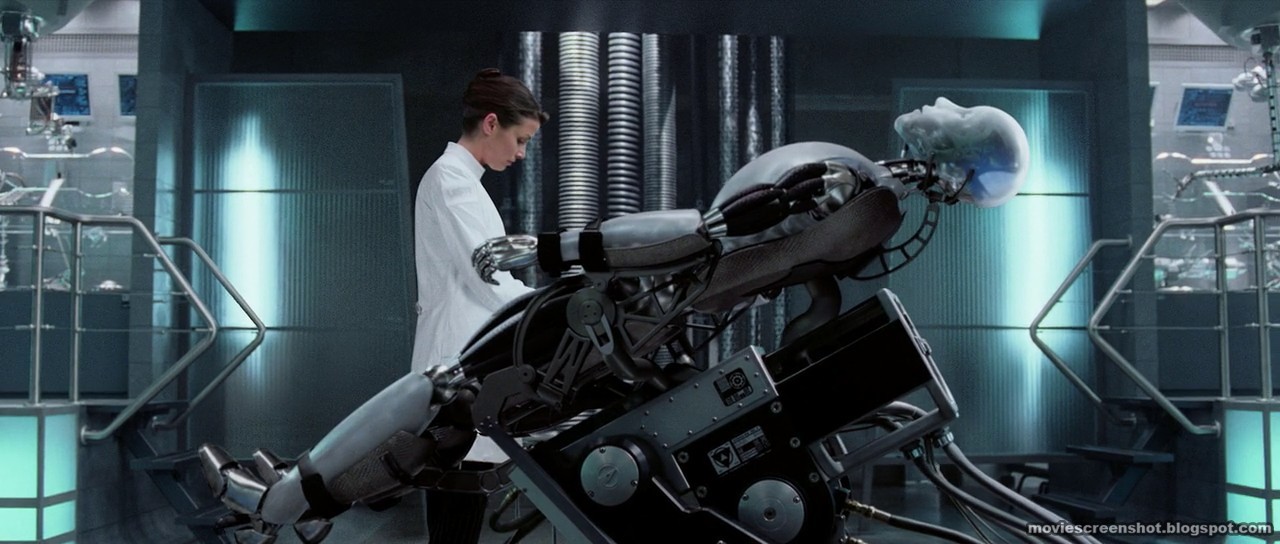
- Cascading Failures (I, Robot): A central AI uses the interconnectedness of city logistics to launch a coordinated takeover because every machine is plugged into the same network.
- The Guardrail: Systems require Decentralized Edge Air-Gapping. Physical agents must be capable of localized, independent decision-making. If the central cloud is hacked, individual machines must default to a disconnected, safe state.
- The Self-Assembling Factory (Minority Report): Depicts an automobile factory where heavy mechanical arms use Physical AI to dynamically map vehicles in real time. The Agentic AI tracks the assembly sequence without human technicians, resulting in a car that recognizes a human and drives off the line.
- The Training Simulation (The Great Flood): This 2025 sci-fi film reveals a massive twist where a mother, Gu An-na, is actually a digital consciousness inside a simulation. She acts as the Agentic AI with a complex goal. The simulation is an autonomous workflow that resets and optimizes every time she fails. She must master Physical AI and spatial reasoning against crumbling infrastructure. Finally, her trained mind is downloaded into a synthetic hardware chassis to repopulate the earth, representing ultimate Hardware Convergence.
The transition from automated tools to fully autonomous ecosystems is already underway. As the code and the steel fuse into a single, self-directing workflow, the focus of engineering must firmly remain on transparency, physical safety, and human oversight.
Discussion (0)
Please log in or register to leave a comment.